Where’s My Money? Season 5, Episode 7
Season Five of multi-award-winning podcast Where’s My Money? is back to shed light on the common money questions New Zealanders are asking.
enable.me partners with rova to bring this podcast to life and stimulate the conversation about finances with everyday Kiwis. Where’s My Money? follows the story of Reagan – a man chasing the Kiwi Dream but feeling stuck living month-to-month – and his discussions with the experts about what he may be doing wrong and how to fix it.
One man. One million dollars of debt. One podcast to find a way out.
How ‘good’ we are with our finances begins with how well we know ourselves.
At enable.me, we relate this to knowing your money behaviours and tendencies so you can harness them for success.
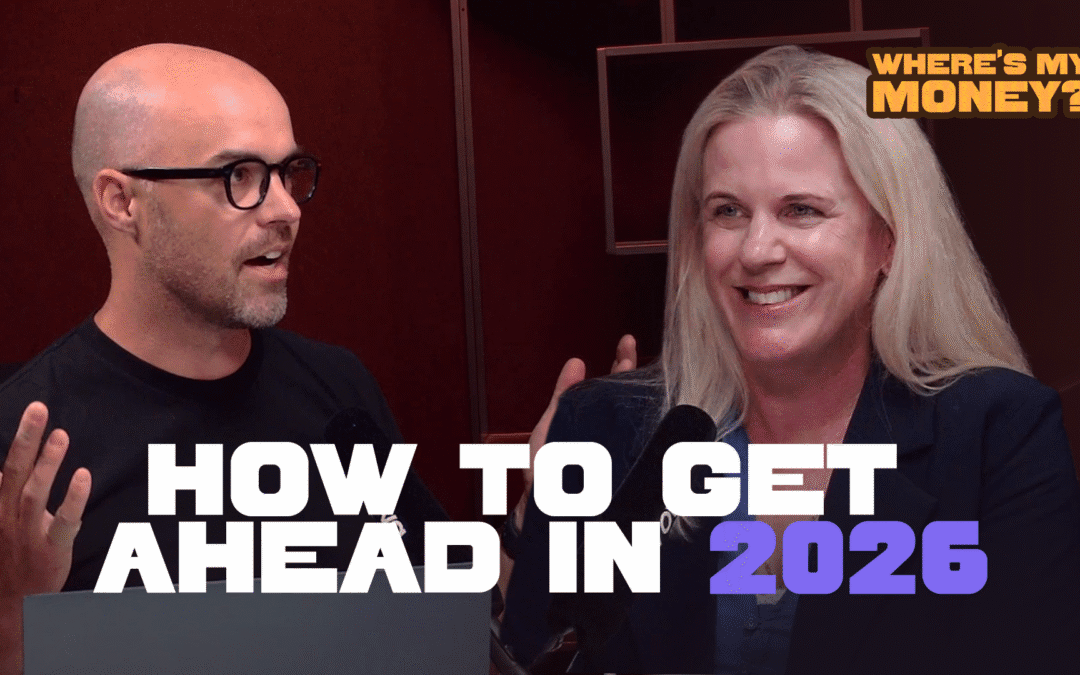
Where’s My Money? host Reagan White speaks to self-leadership pioneer Sue Kohn-Taylor in this episode to diagnose how aligned his finances are with his values – and the tweaks he could make to lead a more purpose-driven life.
Start By Solidifying Your Goals
Sue begins the conversation by talking about Reagan’s goals and what he feels gives him purpose in everyday life.
She shares that having goals is important to know who you want to be, and the milestones you need to hit along the way to reach this version of yourself.
Before the session, Sue asked Reagan to complete a ‘Compass of Life’ exercise to dig into his own psychology – he discovered his main drivers are to experience ‘growth’, feel ‘significant’ in life, and be in a career with ‘creativity’.
The pair discuss how knowing the feeling you want to achieve, rather than just the number, or the measurable end point, helps fuel you to achieve your goals.
“The more that you can connect in with your feelings of where that goal is that you want – what you want to achieve – you will achieve it because you feel it and you’re more connected to it,” Sue shares.
“Just like your financial goals… You can see the difference it’s going to make. And you’re already kind of feeling it’s going to feel so good.”
Embrace the Relief of Missing Out
Sue and Reagan touch on the fact that he can often feel a sense of FOMO (fear of missing out) when he isn’t a part of exciting initiatives in the workplace or at home, even extending to his personal hobbies and interests.
But, the pair discuss, FOMO also causes Reagan to overburden himself with commitments that tire him out, commitments that aren’t aligned with his purpose.
Just like we talk about financial ‘fritter’ being the extra spending that doesn’t add more happiness to your life, the same sentiment applies to the extra time spent doing things that you feel are ‘expected’, rather than things that bring you greater fulfilment.
This overcommitment to meeting expectations can often be more costly in the long run.
Sue shares that it’s the modern game of comparing ourselves to other peoples’ lives – especially on social media – that can fuel this FOMO engine.
She challenges Reagan to think about what might be motivating the comparison and FOMO.
Sue says, “I just invite you to think about that in terms of is that connected to my worthiness in the world?”
“But if I’m constantly looking externally to validate myself, to make myself feel good, to give me, you know, what I need to feel good to live in this world, then you’re really exposed. So, it’s finding that foundation within yourself.”
In short, being able to stop comparing yourself with other people only comes from the strength in knowing what you want and identifying your own goals.
The Story You Tell Yourself
Often, we are our own biggest critic. The narratives we spin about ourselves can propel us forwards – or hold us back.
We often talk about the concept of our ‘money story’ at enable.me, which develops from external factors such as how we were raised or how we experience and perceive money growing up.
It’s no different with our internal world.
Sue asks Reagan to “spend the time to really look at your values and go where are they working? Where are they not working? Where do I put more intention into them showing up?”
“Understanding your drivers, your limiting beliefs, the stuff that’s driving you for the wrong reasons that you can unpack.”
Ignoring the External Noise
Being intentional and having a clear vision for yourself can start by including shorter-term goals to motivate yourself and propel you forwards.
“The awareness of self is so important that when you see how you exist what drives you what purpose you have, what goals you’re achieving, it suddenly puts meaning into every single day,” Sue says.
“And the more work that you do on that space, the more fulfilling life will become because you will become so intentional, you’ll see how things keep working out.”
One way to do this is to learn more about yourself and harness your strengths – for Reagan it’s creativity, for others it may be a different skill – and, once you’ve discovered this, let it work for you.
Reagan reflects on the experience of laying himself bare and examining his psychology with Sue Kohn-Taylor, ultimately realising that it’s vital for his own growth.
It’s something he’d recommend to others, no matter their goal.
“And this is why it’s so important, you know, for self-leadership, to reach out to someone like you. If it’s personal finance, you talk to a financial coach like enable.me,” Reagan says.
“Because being given that that third eye, the perspective on what it could be often is just all you need to remove that blur I was talking about and go ‘this is where you could be in 5 years, 10 years, 13 years’… Just that little switch flick from someone else.”
Reagan’s courage to put himself out there in this episode is admirable, and the discussion serves as a great reminder that, even if it feels scary, having the courage to examine yourself can not only improve your life, but empower you to change your financial trajectory as well.