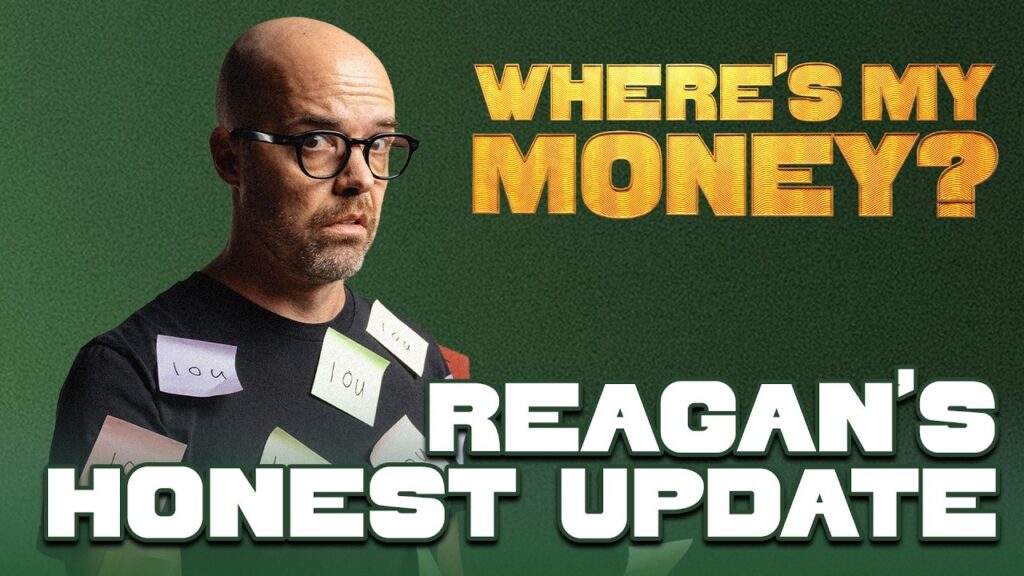
Where’s My Money? Season 7, Episode 1
Where’s My Money? is back for Season 7 with a fresh new look and more money content to help Kiwis work through their finances and make considered moves towards financial freedom.
enable.me partners with rova to bring this podcast to life and stimulate the conversation about finances with everyday Kiwis. Where’s My Money? follows the story of Reagan – a man chasing the Kiwi Dream but feeling stuck living month-to-month – and his discussions with the experts about what he may be doing wrong and how to fix it.
One man. One million dollars of debt. One podcast to find a way out.
Where’s My Money? kicks off Season 7 with a one-on-one coaching conversation between host Reagan White and his enable.me financial coach Shelley Palman. The podcast’s last check-in on Reagan’s “one million dollars of debt” was during Season 5 in Reagan’s Money Madness Revisited, where the pair chatted about how his household had moved from “survival” to focusing on accelerating his progress.
Now, they’re back in the podcast hot seats to celebrate the progress he’s made since – and have the tough conversations about some of the things that may have eroded that progress. It’s an honest look at his finances, and a positive forward-planning session about what he can focus on next.
Where’s Reagan’s Money?
Between their last financial check-in and now, Reagan has “fixed the mortgage,” and put together a plan to help them chip away at the debt faster. A lot of the actions they had discussed were putting them in a great position to make positive money moves: growing their surplus so that it could be put to good use and making the most of some “tailwinds” like “daycare wins and interest rates… [and] lifted income.”
As Reagan explained, finances aren’t only personal, for him it’s a “team event,” and involves the whole “family unit.” But, just like many Kiwis, the summer and holiday period knocked back their progress by eating into that growing surplus.
He shared that “the Christmas presents thing,” the “trips to the family bach over summer,” and the “full tanks of gas,” were a big part of what got in the way of achieving everything they had set out to achieve.
The honest look at Reagan’s finances in the beginning of the episode illustrated some important points when it comes to improving your finances and working with a financial adviser or coach. Mainly, no one can actually do the ‘doing’ for you. You can get all the right advice and have a plan in place, but it also takes personal motivation and consistency to put that plan into action.
Reagan and his partner learned this in their recent quarterly check-in with Shelley. He said, “you figured out that we hadn’t taken [your] advice,” and that it had meant the couple hadn’t made the progress they had planned to.
Shelley responded with understanding. It’s nothing she hasn’t seen before. She says that people can feel quite “resigned” at the realistic thought of their finances.
“When you do have a really large mortgage… there’s that feeling of ‘how will I ever pay this off ever?’”
That’s the dangerous part. If you feel resigned to an outcome, it begins to feel like an inevitability. Though that’s often not the case and there’s plenty of actions to take that can improve your trajectory, it can be easy to fall into that mindset.
That’s where “money psychology,” comes into play, Shelley says. It’s about gaming your tendencies with money, so you capture the wins with a “focus on your systems,” and harness the feeling that makes you excited.
As Shelley puts it, the wins make you “want to go again,” and keep chipping away at your goals.
Cancelling credit cards and refocusing the budget
Instead of labouring over what went wrong, the inspiring turn of the episode was hearing about the deliberate adjustments they were making moving forwards.
This means making sure to “change up the systems,” and put things in place that will ensure success. For Shelley, “account structure” was the most important thing, along with removing the temptation to spend more than they need to.
To that end, a large shift was finally cutting up their credit cards so that they would stop borrowing from their future selves and burdening them with short-term debt.
Reagan said, “there’s actually a limit to it,” when you’re using the cash you have, rather than putting it on credit. This simple change means spending becomes more intentional and planned.
“I think the way we’ve reworked the budget in terms of what’s available to us week to week… that should mitigate the need for that credit card.”
He reflected that it actually helped improve their whole family’s mindset and enjoyment of big purchases, such as family holidays. “To have a pot of money there, is actually going to be as good as having a holiday booked,” he said.
Similarly, the household have removed the revolving credit function on their mortgage to get them out of a “hovering” financial state and moving towards making more progress.
Why it’s important to celebrate the wins
There’s perceived pressure that comes with being a public-facing host of a popular money podcast. In a humorous reflection, Reagan shared that though people expect him to have everything sorted after six seasons of hosting the show, he still needs the support and accountability enable.me coaching provides.
This confession created a powerful moment in the episode, with Shelley reiterating that Reagan and his family are making incremental shifts – and that all progress is good progress. It was a timely reminder to look for the wins in your finances as you move through the journey.
She told Reagan it’s “really really important that we look back at what you’ve achieved because humans are famously bad at worrying about what’s going to happen in the future, but they forget to look at what’s gone right.”
“So actually, you have made progress on your mortgage. Yes, as a percentage of the entire million-dollar mortgage it seems small, but progress nonetheless.”
In amongst his handwringing about making mistakes, she shone a light on the positives of the situation. That’s why it’s beneficial to have an external perspective when it comes to finances, because a coach can see into your blind spots, whether that’s seeing the risks that you haven’t noticed – or, sometimes more impactful, the wins that keep you motivated along the way.
As Shelley said: “That is why we have to be very careful to measure progress.”
enable.me Coach Hotline: investing while paying down a mortgage
The first episode of Season 7 also features the first instalment of a new podcast segment: The Where’s My Money? Hotline. Each episode, Shelley will be here to answer burning money questions from podcast listeners.
The question for this episode was: “Do you recommend investing while paying off a home mortgage? If so, at what point should someone start?”
The general response from Shelley was that: “it depends on your situation.”
When you have debt (such as a mortgage), it’s important that any area you inject your surplus cash into is improving your overall net worth. It’s about the big picture of your finances, rather than looking at each aspect of your finances in isolation.
This means prioritising where your money goes, so it works as hard as it can for you.
As an example, she shared: “If you’re in a position where you’re getting into short-term debt because the pay is not enough to kind of cover your expenses, we pay off the short-term debt.”
She pointed out that if you’re a contributing KiwiSaver member and have a mortgage, that’s investing. So, in many cases, New Zealanders are already investing while they reduce debt or work towards their financial goals.
Shelley and Reagan related the question back to his own story, providing an important illustration of the concepts on a personalised scale. While Reagan has a larger mortgage and wants to get that under control, it makes sense that he focuses any surplus and energy on reducing that, rather than investing. The impact of reducing the mortgage, and the long-term interest savings that will create, is more beneficial than what most investment levers would give him – but only for his specific situation.
That’s the key, both in setting goals and creating a strategy to achieve them. That for each individual situation, you’re making the decision that is best for you.
It’s easier to do that when you have expert advice on your side, and it’s important to work with experts who can provide regulated, professional and in-depth advice relevant to your situation. As Reagan touches on through the episode, there’s a lot of unregulated advice circulating out there, especially on social media. People who don’t have qualifications, experience or processes to back up their recommendations.
If this episode got you thinking about improving your financial outlook, or about shifting your priorities, consider booking a consultation with an enable.me coach (costs apply). They’ll help you diagnose your starting point, create goals you’ll feel motivated to work towards, and a strategic financial plan that can help you achieve them.
Disclaimer: The Where’s My Money? podcast and the information shared by host Reagan White and his guests does not constitute individual financial advice. If you’re interested in receiving financial advice, you can book a consultation with an enable.me coach. Costs apply.