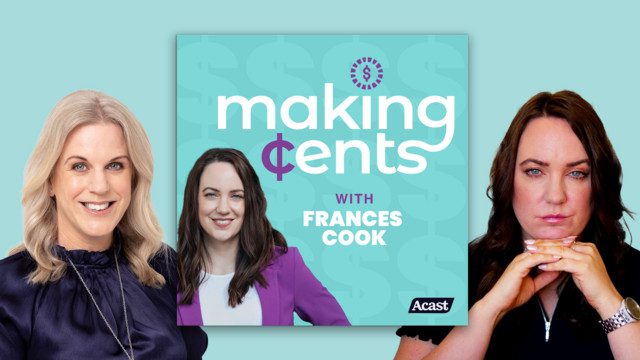
Making Cents with Frances Cook: Where Property Still Makes Sense
Katie Wesney is back in the hot seat on Frances Cook’s Making Cents to answer a listener’s burning question: is property investment not the winner it used to be?
The answer, Katie says, isn’t a one-size fits all. With headlines focused on expensive upfront costs and investors fleeing the market, it makes sense that people are hesitant. Yet, when you look beyond the negative news stories, it’s clear that property can still be advantageous from an investment perspective.
“The better question to be asking is ‘how does property sit within my wealth plan?'”
The key is to understand property as a longer term investment, says Katie. When you zoom out to the longer term, factors such as inflation can actually serve to strengthen your position: mortgage debt will be worth less in the future. People get stuck when they only look at year one, instead of the long-term trajectory.
But it’s often this starting point that people find most challenging.
The Strategic Advantage of New Builds
One of Katie’s most practical insights is to consider new builds as a smarter entry point.
From a lending perspective, new builds require a smaller deposit. They also come with a 10-year master builder guarantee, lining up neatly with the typical length of a property cycle (at which point values have historically doubled).
The type of property matters too. A cheaper apartment with a higher rental income relative to price will likely have limited capital gains. More apartments can always be built, so there’s less scarcity. Investing in a property with land attached will likely have a lower initial income, but the potential for stronger long-term capital gains.
The reality is that good investment properties will usually require topping up in the early years. If that property is a new build, you can ease some of the early financial pressure. A well-built property with a 10-year guarantee has a lower risk of high repair and maintenance costs. They also tend to attract reliable tenants, says Katie. This can further help protect and de-risk your position.
Choosing the right property from the outset means you’ll be less likely to get stung with unexpected costs while you’re still putting in a bit extra to cover your mortgage.
It’s Not Just What Type Of Property: Location Matters
Where you buy matters just as much as what you buy. With Auckland and Wellington facing tough property and job markets, Katie advice is to cast a wider net.
Christchurch, Queenstown and the wider Wakatipu region more affordable right now, with good fundamentals: strong rental demand and potential for future capital growth. There’s also a benefit to investing outside of the city you live in: risk mitigation. New Zealand is prone to weather events and natural hazards, so spreading your property across regions protects you if one area is hit hard.
That said, it’s not simply a case of Auckland being off the table and the South Island being the answer. But make sure you know the difference between a bargain, and something that’s cheap for a reason. Wherever you buy, the fundamentals need to stack up.
If you’re looking beyond your own city, it’s essential that you’re clear on your criteria, and are working with good people on the ground. Katie treats property management as close to essential. Most people don’t have the time or inclination to manage a rental themselves, and since property management fees are tax deductible, it’s an easy decision to outsource.
There’s more to it than convenience, though. An investment property is someone else’s home, and there are rules in place, for good reason, around how it’s managed. Getting it
wrong can have real consequences. As Katie puts it, there’s an ethical dimension too. We should be housing people in properties that are actually good to live in.
The Power of Leverage
When it comes to checking whether a property has good fundamentals, resources like realestate.co.nz are a good starting point for data. What’s just as important is understanding your own situation and capacity, particularly when it comes to the deposit.
Most people don’t have a chunk of cash sitting in a savings account ready to invest, but they may well have equity in their home that can be put to work. For Katie, this is one of the most underused levers in property investing.
Leveraging equity opens the door to bigger growth potential over time, when it’s done properly. Understanding your cash flow and your ability to top up a property if needed is essential. What really matters, says Katie, is buying the right property, and having the capacity to hold onto it through a full cycle.
Know Your Criteria, Know the Fundamentals
For people interested in buying property, new builds and different regions are key considerations. The advice to keep top of mind is something more foundational: understand your criteria.
The question Katie hears most often is: “What should I spend up to?” This is the wrong question entirely. Everyone’s situation is different. Ask yourself instead: what does this property need to deliver for you, from a cash flow perspective? What can you actually afford, and what role does this property need to play in your bigger picture?
Because, as Katie puts it, the goal was never simply to buy a property. The goal is to grow wealth for your future. Getting clear on your investment property criteria, and understanding how it fits your individual financial plan, is what matters most.
Could property be part of your wealth plan?
Watch the full episode below:
Disclaimer: The Making Cents with Frances Cook podcast and the information shared by host Frances and her guests does not constitute individual financial advice. If you’re interested in receiving financial advice, you can book a consultation with an enable.me financial coach. Costs apply.