Where’s My Money? Season 6, Episode 3
Season 6 of the multi-award-winning podcast Where’s My Money? has arrived to keep bringing you the financial content that helps you be better with your money.
enable.me partners with rova to bring this podcast to life and stimulate the conversation about finances with everyday Kiwis. Where’s My Money? follows the story of Reagan – a man chasing the Kiwi Dream but feeling stuck living month-to-month – and his discussions with the experts about what he may be doing wrong and how to fix it.
One man. One million dollars of debt. One podcast to find a way out.
When Where’s My Money? host Reagan White bought a home with his wife Laura, he felt he had hit the jackpot with low interest rates post-COVID of 2-3%. They’d bought a dream house, somewhere they felt secure and proud to raise their children.
But then came a problem – when the economy began to recover from the post-pandemic recession, interest rates began to rise. Mortgage payments rose steeply with them. Any excess cash was now being funnelled into the mortgage and interest payments so that the family could stay in their home.
That’s why this podcast was created – to share Reagan’s story and get insights from experts about the steps he could take to stem the flow of cash. It’s a story many Kiwis relate to and it’s indicative of why so many New Zealanders now keep a keen eye on the OCR announcements, when it generally hasn’t felt like such a ‘hot topic’ before.
Now, it’s common to hear people talking about the OCR and interest rates at the cafe in the morning coffee lines, at their desks in the office, at dinner parties. But many still aren’t sure what it practically means for their mortgage, debt, or even their cash or Term Deposits in the bank.
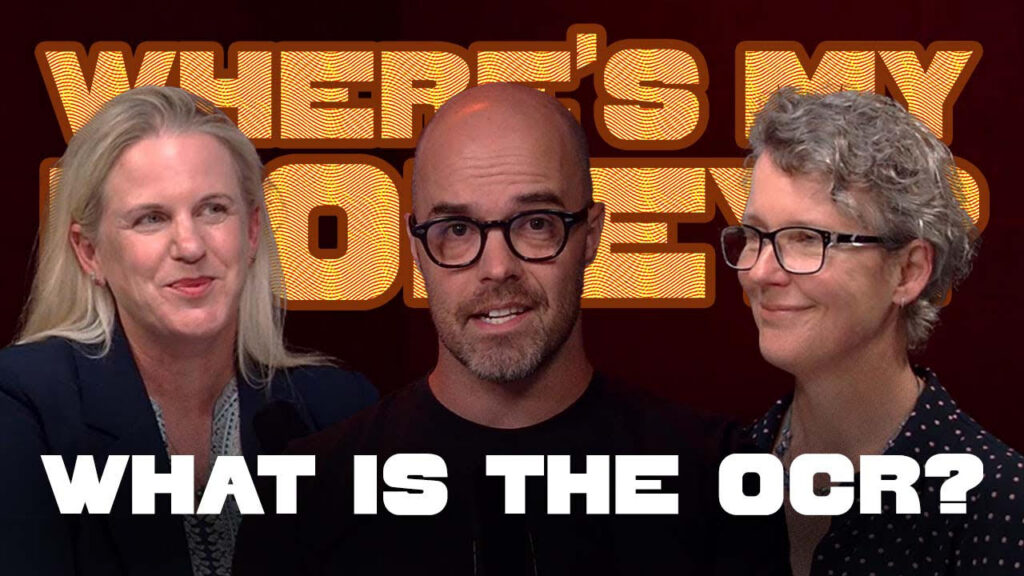
On this episode of Where’s My Money?, host Reagan White talks to ANZ Chief Economist Sharon Zollner and enable.me Head Strategic Coach Katie Wesney to discover what the first OCR announcement of the year means for your mortgage.
The 18 February OCR Announcement
Each year, the Reserve Bank of New Zealand (RBNZ) makes eight announcements about the Official Cash Rate (OCR).
There are a lot of acronyms in the finance world, bear with us.
On 18 February, the RBNZ made their first one for 2026. Unlike much of 2025 where the OCR steadily dropped by 25 or 50 basis points for almost all of the announcements, this time they have held the OCR at 2.25%.
This can be seen as a positive step, a sign of economic recovery – and ANZ Chief Economist Sharon Zollner explained this move on the podcast.
She said the decision was based on “the data coming out stronger – both activity data, but also inflation data was a bit stronger than expected as well. But then the Reserve Bank came out yesterday and just sort of ‘everybody just chill, it’s okay.’”
Sharon explained that RBNZ is thinking: “Yes, inflation’s a little bit high, but we are confident that it’s going to start falling again really soon and that we don’t have to raise the official cash rate anytime soon. We don’t think we’ll be cutting it anymore, but we don’t think we’ll need to be hiking it till the end of the year.”
This has a flow-on effect on wholesale interest rates, which impacts what the banks and mortgage lenders will do, and then translates to your mortgage interest rate.
How the OCR influences your mortgage interest rate
There isn’t a direct line from the OCR announcement straight to retail interest rates.
Even though the common myth is that it’s the only thing that influences what you pay in interest, there are many other considerations at play that determine how the banks move interest rates.
Banks are a business, of course, and enable.me’s Katie Wesney reminds us to think of them as that. She wants us to remember we have power as the consumer to be active in our choices.
“As a customer you’ve got to be aware that the bank is a business. So, it’s about not being passive about your own financial strategy, which is I think really empowering message for people,” she says.
“The OCR is a really important indicator of what is going to happen and might happen into the future. But there’s lots of different things at play in terms of the wholesale rates, demand, etcetera, that feed into what you and I pay on our mortgage debt.”
It’s important to think about yourself and the future you want. Make the moves that benefit you – even if that’s moving banks or having a tough conversation with your current provider – because, at the end of the day, loyalty doesn’t necessarily pay down your mortgage faster.
The Only Certainty We Have is Uncertainty
Both panellists agree that uncertainty is always a factor in finances – and will always be a part of the decision-making process.
It can make it harder to know what to do. It can make your options feel blurred by emotional reactions, rather than focusing on the data and numbers. It can give you what we at enable.me call ‘analysis paralysis’ – so nervous about making a wrong move that you make no move at all.
But as Sharon warns, “not doing anything is also a decision.”
Katie agrees, adding that it’s the decision “with the greatest opportunity cost, to be honest, because the window closes to take action.”
Many people are waiting for conditions to become more favourable. They’re waiting for it to feel simple, easy, for interest rates to get as low as they did post-COVID. The duo warns against this mindset, and against chasing certainty.
“You’re never going to have ultimate certainty other than things will be uncertain,” Katie shares, “and I think if you know your numbers in terms of what you’re going to pay for a set amount of time, that speaks to a lot in terms of how brave you can be elsewhere in terms of investing.”
Sharon echoes this sentiment, adding that we are in recovery mode as a country. She says that it may not be felt evenly, and it’s unlikely that property will be a driver of New Zealand’s economic recovery in 2026, but there are positive data points and indicators to show we’re moving in a positive direction.
“I think the person on the street probably still thinks they’re waiting for the recovery to start but it’s actually well underway,” Sharon says.
Know what you can have control over in your financial destiny, take that control and use it to better your situation. If you need clarity, speak to a financial adviser about your mortgage and financial plan. It’s what we do every day at enable.me – if you’d like to speak to one of our financial coaches, book an initial financial consultation to get the full picture of your finances and an understanding of the moves you can make next to improve your trajectory, and financial future.
Watch Where’s My Money? episode 3 to benefit from the full discussion about the OCR:
Disclaimer: The Where’s My Money? podcast and the information shared by host Reagan White and his guests does not constitute individual financial advice. If you’re interested in receiving financial advice, you can book a consultation with an enable.me coach. Costs apply.